
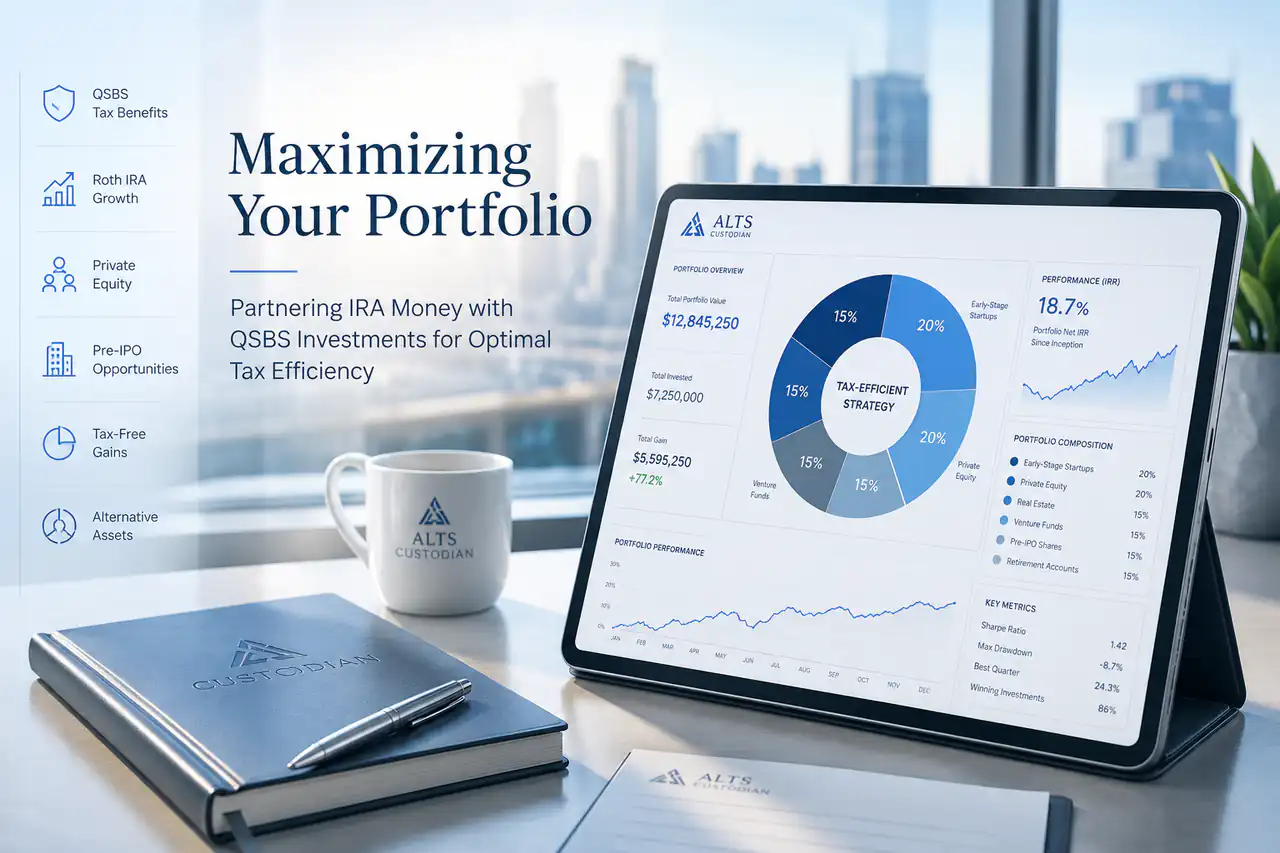
Maximizing Your Portfolio: Partnering IRA Money with QSBS Investments
Investing in alternative assets, startups, and private equity can generate substantial wealth—but only if structured correctly.
The right strategy can eliminate capital gains taxes, maximize retirement savings, and optimize cash flow. By combining Qualified Small Business Stock (QSBS) investments with Self-Directed IRA (SDIRA) strategies, investors can build a tax-efficient portfolio that balances high-growth opportunities with long-term wealth preservation.
In this guide, we’ll explore how to partner IRA money with QSBS investments to create the perfect portfolio for long-term tax efficiency.
The Two Most Powerful Tax Advantages: QSBS & IRA Investing
Qualified Small Business Stock (QSBS) – The Ultimate Tax-Free Investment
The QSBS exemption (under Section 1202 of the U.S. tax code) allows investors to exclude up to 100% of capital gains on the sale of qualified startup stock, provided they meet these criteria:
- The investment is in a C-Corp with less than $50M in assets at the time of investment.
- The investor holds the shares for at least five years.
- The business operates in a qualifying industry (e.g., tech, healthcare, manufacturing).
Self-Directed IRA (SDIRA) – Tax-Advantaged Growth for Alternative Investments
A Self-Directed IRA (Traditional or Roth) allows investors to hold private equity, real estate, and startups inside a retirement account. The tax benefits depend on the account type:
- Roth IRA: Investments grow tax-free, and withdrawals are 100% tax-exempt in retirement.
- Traditional IRA: Investments grow tax-deferred, and taxes are paid upon withdrawal.
How to Combine QSBS and IRA Investments for Maximum Tax Savings
Many investors wonder: Should I invest in a startup using my IRA or personal funds? The answer depends on the startup’s QSBS eligibility and the type of returns expected. Below, we outline the ideal strategy for different asset classes.
Investing in Startups: QSBS vs. Roth IRA
When investing in early-stage startups, choosing the right account is crucial.
| Investment Type | Best Account Type | Tax Benefit |
|---|---|---|
| QSBS-eligible Startup | Taxable (Personal, Trust, or LLC) | 100% capital gains exclusion after 5+ years |
| Non-QSBS Startup | Roth IRA | 100% tax-free growth |
| Venture secondaries or pre-IPO Shares | Roth IRA or Checkbook IRA | Tax-free or tax-deferred growth |
Private Equity & Venture Funds: Best for SDIRAs
For investors looking at private equity funds, debt funds, or real estate-backed investments, Self-Directed IRAs (SDIRAs) provide an ideal tax shelter.
Why?
- These investments don’t qualify for QSBS (since funds aren’t “active businesses”).
- IRA structures eliminate immediate tax burdens on fund distributions and capital gains.
Pre-IPO & Secondary Market Investments: Ideal for Roth IRA or Checkbook IRA
If investing in late-stage pre-IPO companies (e.g., SpaceX, Stripe, Databricks), using a Roth IRA or Checkbook IRA ensures tax-efficient compounding.
Best for:
- Restricted stock purchases before IPOs.
- Startup secondaries and employee share liquidity events.
- Venture debt funds with growth potential.
Real Estate, Crypto, and Hard Assets: Best for Checkbook IRA
For investors interested in real estate, crypto, or other alternative assets, a Checkbook IRA (a self-directed IRA with an LLC) provides greater control and tax efficiency.
Best for:
- Real estate syndications & rental properties.
- Cryptocurrency investments inside an IRA.
- Alternative lending & peer-to-peer investments.
Creating the Perfect Portfolio: A Balanced Strategy
Here’s how you can diversify your investment capital to leverage QSBS and IRA benefits.
| Investment Type | QSBS (Personal Funds) | Roth IRA / Roth 401(k) | Traditional IRA / SDIRA | Checkbook IRA |
|---|---|---|---|---|
| Early-Stage Startups | (for QSBS tax-free gains) | (if not QSBS eligible) | (if fast-moving deals) | |
| Venture & PE Funds | (for tax-free growth) | (for tax deferral) | ||
| Pre-IPO / Secondaries | (if QSBS eligible) | (for tax-free gains) | (for fast execution) | |
| Private Real Estate | (for tax deferral) | (for active investing) | ||
| Crypto & Hard Assets | (for tax-free growth) | (for direct trading) |
Final Takeaways
To build an optimized, tax-efficient investment portfolio, follow these steps:
- Use personal or trust accounts for QSBS startup investments to maximize 100% capital gains tax exclusions.
- Invest non-QSBS startups via Roth IRA to ensure tax-free growth.
- Use SDIRA for private equity, venture debt, and real estate funds to defer taxes on passive income.
- Utilize a Checkbook IRA for quick capital deployment in crypto, real estate, and pre-IPO secondaries.
- Convert Traditional IRA assets to Roth IRA before a big valuation spike to avoid future taxes.
By combining IRA strategies with QSBS investments, investors can eliminate capital gains taxes, grow wealth tax-free, and structure a portfolio that thrives in any market condition.